How to choose a cross-border payment provider
Compare international payment providers by total cost, supported currencies, delivery times, safeguards and the needs of your business.
- Author
- Transwap Editorial Team
- 2 min read
- Updated

In this article
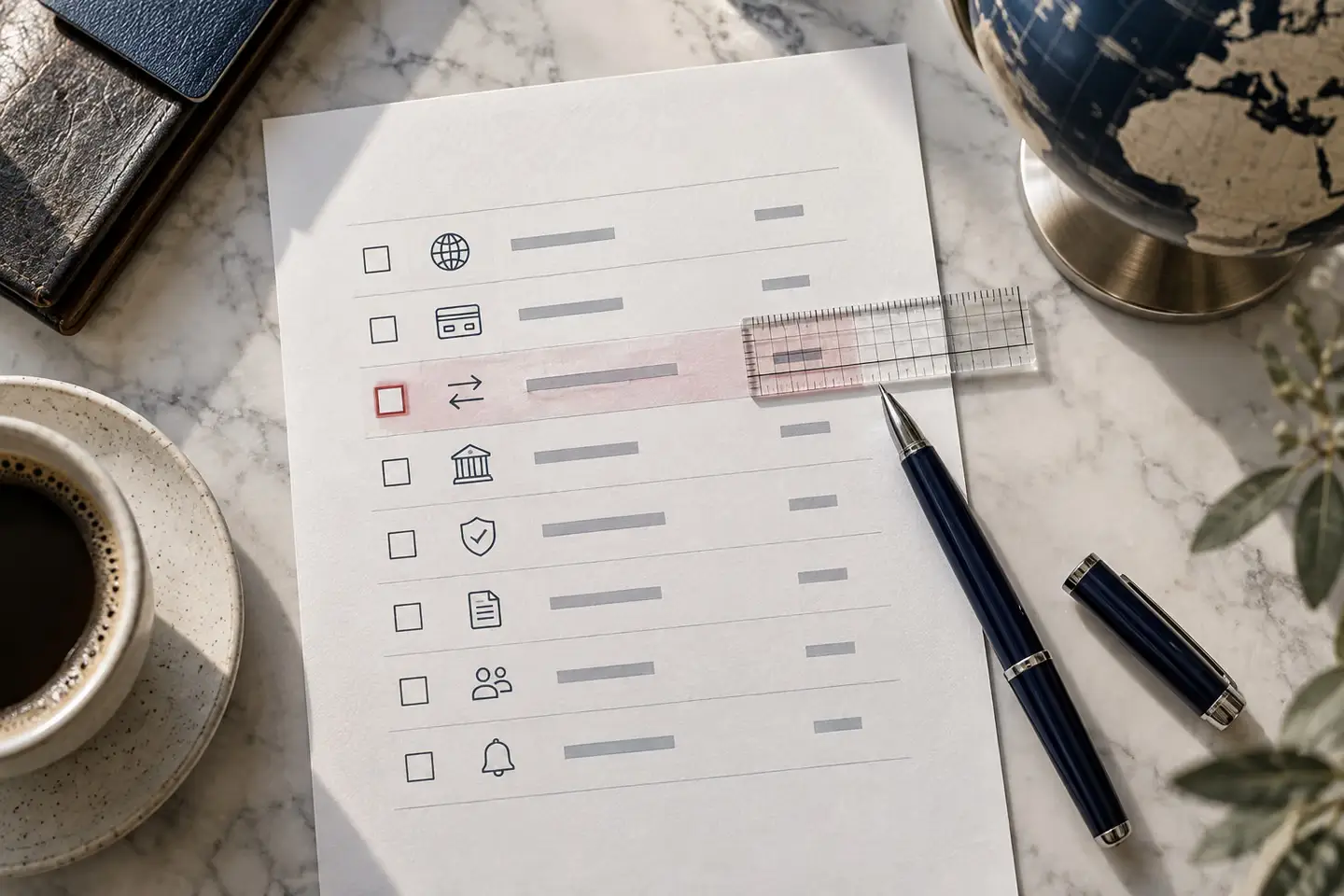
The right cross-border payment provider should fit the way your business pays and gets paid. Start with your destinations, currencies, payment sizes and deadlines, then compare providers against the same requirements.
A low advertised fee is only part of the picture. The exchange rate, recipient deductions, operational controls and support process can all change the outcome of a payment.
1. Compare the total payment cost
Request a quote for the same amount, currency pair and destination from each provider at roughly the same time. Record the amount leaving your account and the amount expected to reach the recipient.
Check the transfer fee, exchange-rate margin and any possible intermediary or recipient charges. A zero transfer fee does not necessarily mean the lowest overall cost. For recurring payments, include account and service charges in your comparison.
2. Check the countries and currencies you need
A provider’s headline country count does not tell you which currencies, payment methods or account types are available in each market. Confirm your actual combination of sending entity, destination, currency and recipient type.
If you receive customer payments overseas, ask separately about collection currencies and local account details. Holding a currency, collecting it and paying it out are different capabilities.
3. Understand delivery estimates
Ask when the provider must receive cleared funds and complete its checks for the quoted arrival time to apply. Consider local public holidays, cut-off times and the recipient institution’s processing.
For payroll or supplier deadlines, plan a buffer and agree who will investigate a delayed payment. An estimate is more useful when the conditions behind it are clear.
4. Review the provider and its controls
Check the legal entity serving your business and its relevant regulatory registration or authorisation. Understand how customer funds are protected and how to raise a complaint. Payment accounts and bank deposits can have different protections; do not treat them as interchangeable.
For a team, look for the controls your workflow needs: clear permissions, payment approvals, recipient verification and accessible transaction records.
5. Test the everyday workflow
Walk through creating a recipient, uploading payment details, approving a transfer and reconciling the result. Check what happens when a payment fails or a supplier sends revised account details. Ask how support is reached during your working hours.
For higher payment volumes, discuss batch limits, accounting integration and API requirements before committing to an operating process.
Where Transwap may fit
Transwap offers business payments, international collections, FX conversions and multi-currency accounts. Compare those capabilities with your actual payment needs, and review our licences and registrations.
Tell our team which markets, currencies and payment volumes you work with so we can confirm availability and explain the relevant fees and process.
Related articles
-
International payments Cross-border payment costs: what to compare
Compare exchange rates, transfer fees, recipient deductions and payment controls before choosing how to send money internationally.
-
International payments How to transfer money internationally
A practical international transfer checklist covering recipient details, exchange rates, fees, delivery estimates and payment tracking.
-
International payments International payment mistakes and how to avoid them
Check recipient details, payment currencies, fees and deadlines to reduce avoidable errors when paying overseas suppliers or sending money abroad.